Archives: News Stories Page 2 of 12

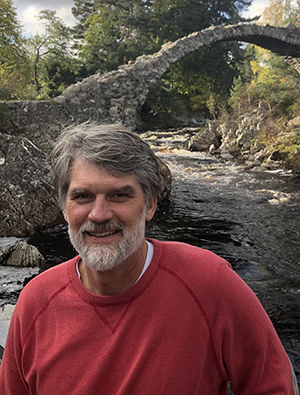
Robert Tighe speaking

Climate Profile: Robert Tighe

Robert Tighe didn’t take a typical path to his medical degree, which is likely why he approaches and discusses health and climate problems in original ways. How many medical doctors do you know who double majored in political science and history?  

Robert Tighe

Industry, nonprofits, government, religious groups – all these communities play a role in addressing the impact of climate on our health. We can create infrastructure leading to meaningful connections to make real impact – that’s the commitment.

“I came into science backwards,” Tighe says, “I didn’t get a PhD. I’m an MD. But I am an MD who has a lab that does basic research. That’s not weird in and of itself. But there aren’t many MDs out there who then do basic research on air pollution. I can probably count them on two hands. Most MDs study along disease lines, not the causes or worsening of disease from environmental pollutants like air pollutants.” 

Tighe is an Associate Professor of Medicine and Associate Professor in the Division of Environmental Natural Sciences at Duke. His main clinical interest is in pulmonary fibrosis, a progressive scarring disorder in the lung, which is often fatal. He has worked to understand links between pulmonary fibrosis and air pollution exposure. Research on pulmonary fibrosis suggests there is some type of ongoing irritation or injury, that leads to pulmonary fibrosis. Several groups have tried to find specific causes of this injury. Tighe proposed that this could be in “the air we breathe,” suggesting that pollutants in the air worsen pulmonary fibrosis via specific mechanisms. “This idea just wasn’t in the literature on fibrosis.” 

Solving this problem on his own was a nonstarter for Tighe. He realized that the questions couldn’t be solved by one approach. It would take many approaches, many kinds of expertise – basic lab science, epidemiology, policy, communications – to address the impact of air pollution on our lungs and to apply directly to the individuals and communities who need the help. The research needed to go beyond the walls of the campus to understand both the causes and the effects. He has broadened that approach to how climate affects human health. He’s now in charge of Duke Medicine’s strategy on climate and health, a significant component of the university’s Climate Commitment.  

“What I love about Duke is this consistent belief in the value of transdisciplinary approaches. Not just the contributions of academic disciplines, but of different communities inside and outside of the university that have valuable perspectives on problem solving. Industry, nonprofits, government, religious groups – all these communities play a role in addressing the impact of climate on our health. We can create infrastructure leading to meaningful connections to make real impact – that’s the commitment.” 

Unfortunately, Tighe feels that the academic world hasn’t done a great job historically of communicating about that impact. “We started with ‘there’s this weird gas, and it’s killing fish and plants, we don’t really understand it, it might be making things hotter, but what we want you to do is consume less, build things that will likely just raise your electrical bill, and do this all altruistically.’ We make too many assumptions that people will understand why we are making these choices,” Tighe said. 

This is where Tighe’s work as a medical doctor informs his approach to climate work. “Health is a much more personal thing. I can say there’s a threat to your health, and then it makes it easier to make the jump to, oh, and this is why and how that threat is happening and how I might be able to do something about it.”  

“With high blood pressure, you can take medicine. Beyond that you can exercise, you can change your diet. Our approach to climate shouldn’t be much different – we need to say ‘this extreme heat is affecting you and here’s what you can do about it. Here are some strategies.’” 

Tighe also stresses that we have to listen to people in communities to understand what they care about. They might not think they have a “climate problem” but it is likely they do. “I met with a pastor group who told me ‘we respect your climate work and that’s all fine and dandy but what we are really concerned with in our communities is gun violence.’ I took the opportunity to explain that physiologic stress drives anger and violence during times of extreme heat and humidity. I realized we could partner on their terms, and address what they really care about.” 

“We at universities are used to just producing information but we don’t always connect the dots. We need to take our observations and move them quickly into a space where it will have impact for an individual. And we can’t wait 30 years to come up with meaningful solutions to impacts of climate change on health,” says Tighe. “The cat will be way out of the bag at that point. How do we accelerate the path to discovery? We need to think on five-year scales to make real change possible.” 

Photos courtesy of Robert Tighe.

Doug Nowacek speaking at the UN Oceans Summit in 2025. Photo courtesy of NY Climate Exchange.

Climate Profile: Doug Nowacek

“Jacques Cousteau is known for saying that the ocean is a ‘silent world’ but the ocean is actually an acoustically lively place, including with increasing anthropogenic noise,” remarks Doug Nowacek, who has spent his career studying noise in the ocean, specifically how noise affects marine mammals like whales and dolphins. “All these things humans do in the ocean are noisy, all these interventions – industrial development, shipping, military activity – can have an impact on marine life. Unfortunately, this ocean noise poses three major threats to marine mammals – masking natural sounds, causing hearing damage, and inducing stress, actual stress. Just like noise affects us.”  

Doug Nowacek headshot
Doug Nowacek

We come from a collaborative angle and say, how can we work together to ensure construction doesn’t impact these animals. It’s amazing how responsive they are when you take that approach.” 

Nowacek is the Randolph K. Repass and Sally-Christine Rodgers University Distinguished Professor of Conservation Technology in Environment and Engineering. His is the first position jointly held between the Nicholas School of the Environment and the Pratt School of Engineering. “I actually started my work at Duke when I was an undergrad,” says Nowacek. “I came to the Marine Lab for a summer and learned about the ‘work hard play hard’ ethos of the place. I loved it. You bust it in the lab all day and then hop in a kayak at the end of it. How could I not want to have a job here?” 

Before he arrived at Duke and throughout his career here at the Marine Lab, Nowacek has strived to approach research through the experience of the animals he studies. “Ocean mammals live an acoustic life,” he says. “They have vision, smell, touch, but their acoustic acumen is akin to a dog’s sense of smell. Whale songs, dolphin whistles. They can find and discriminate prey while 2,000 meters under water.” 

Nowacek and his team excel at tagging and tracking whales to understand their behaviors in relation to “anthropogenic” or human-engineered sound. Previously, harpoons were used by scientists to affix monitors to the mammals (something Nowacek never did, to be clear). Now they use drones to hover over the whales and tag them. “I was doing drones before drones were cool,” says Nowacek.   

The drones carry a suction cup tag that measures a suite of variables. “We are basically putting an iPhone on the whales, which tracks their path and depth, records their sounds, all data used to assess the impact of human noise on their actions – how they hunt, migrate, and even demonstrate stress.” 

Nowacek had an instructive research project when he was a postdoctoral fellow at the Wood Hole Oceanographic Institute years ago. “We were trying to understand how whales – right whales, called that because ‘they are the right whales to kill’ – might respond to alarm signals from a boat. Could we somehow tell the whales that they might be in danger as a vessel approached?” 

“But imagine if you were raised in the woods,” Nowacek continues, “and you were put in the middle of a busy intersection and then a siren blared at you. You wouldn’t know what to do. That’s what was happening to the whales, even as we were trying to help them.” That research project was ultimately a success in that it informed more successful interventions later on. 

In the last 25 years, sadly, there’s no record of right whales dying of old age. There’s fewer than 400 of them left in the world. Every dead whale that is found has died as a result of being caught in fishing gear or being hit by a boat. Fortunately, Nowacek and his team have developed strong relationships with government agencies, NGOs, the Navy, and shipping and industry leaders to mitigate further loss to this animal and the greater marine animal community. He is also engaged internationally and notes that ocean noise was a significant topic at the UN Oceans Conference in Nice, where a resolution was passed, with almost 40 countries signing on, indicating growing recognition of the issue.  

Nowacek and his team are currently working on a project that seeks to understand how the development of ocean-based wind farms may affect marine mammal, bird, and bat communities. Both how their life-cycle patterns are affected not only by the noisy construction efforts, but also the ongoing management of these massive but critically important structures for renewable energy.  

“We don’t approach industry from a regulatory perspective. When we started talking to them, they were concerned that we were the police, like we were there to catch them on bad behavior, but it’s not the case.  We come from a collaborative angle and say, how can we work together to ensure construction doesn’t impact these animals. It’s amazing how responsive they are when you take that approach.” 

Top photo courtesy of NY Climate Exchange.

Our Climate Commitment – Q&A with Toddi Steelman

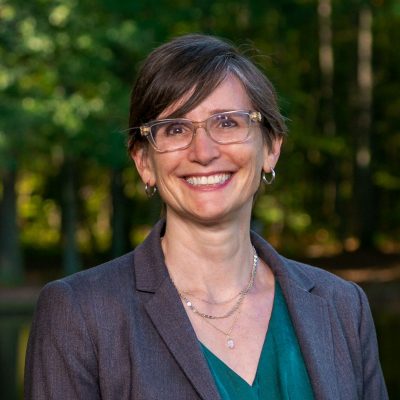
Toddi Steelman Portrait

Toddi Steelman, Vice President and Vice Provost for Climate and Sustainability at Duke, talks about the latest updates on the Duke Climate Commitment including the 2030 Strategy to guide its research, education, external engagement, sustainable operations and community partnerships. She also talked about the focus areas of the Climate Commitment and the connection to Duke’s future.

Q: Why does the Climate Commitment matter to us all?

Toddi Steelman: A warming world has many unseen impacts on our lives, from the air we breathe to the food we eat. It impacts our health in many ways, from increasing heat and changing nutrition patterns to affecting our food systems and the functioning of our organs. With more frequent and intense storms, floods, and other extreme weather events, it’s crucial that we not only understand how a changing climate impacts us, but also learn how to adapt to these shifts, particularly in sectors that directly affect our health and safety.

Q: How can we prepare for these impacts, particularly in terms of climate-related disasters?

Toddi: Preparation is key. We need to develop systems for better disaster response, whether it’s having emergency plans in place for communities, maintaining infrastructure that can withstand extreme weather, or working with local authorities on larger-scale disaster management. The most important thing is to foster a mindset of preparedness, and that includes working across sectors—from emergency management to public health, to ensure a cohesive response to climate-induced disasters.

Q: Climate also impacts our financial systems and policies. How can we adapt in our everyday lives?

Toddi: We know that our climate is already altering risks that we face, and this has financial implications.  Consider how insurance markets have been affected by the LA wildfires or the escalating price of large-scale disasters. Climate risks affect financial stability at the local, state, national and international levels. At Duke, we’re working with many partners on climate finance and policy through research, education and more. Our upcoming Billions to Trillions summit on April 9 will focus on this.

Q: Can you explain the pillars of the Climate Commitment?

Toddi: Absolutely – they are research, education, external engagement, sustainable operations and community partnerships. Each area is critical to our Climate Commitment.

Q: How is Duke creating a more sustainable campus?

Toddi: Duke’s leadership in sustainability is an important part of our strategy. We want to walk the walk. Our achievements in carbon neutrality are a big part of that. Duke achieved carbon neutrality in 2024 and plans to maintain carbon neutrality in 2025. Neutrality means that we produced no net greenhouse gas emissions through a combination of internal emission reductions and high-quality carbon offsets. Now, we are building on that foundation to set even more ambitious goals. We are not just focused on carbon but also on sustainable operations across all areas – waste, water, transportation, and food – and the inclusion of the Duke University Health System in climate and sustainability goal planning.

Q: Can you elaborate on Duke’s climate action planning?

Toddi: After achieving carbon neutrality in 2024 and with our plans to maintain it in 2025, we’re now creating a more ambitious plan to achieve net-zero carbon by 2050 with specific interim reduction targets along the way. Net-zero means reducing emissions by 90% or more and using carbon removal credits for any remaining emissions. We are also expanding sustainable operations strategies for waste, transportation, food and water. One of the exciting projects in 2025 is the launch of Duke’s three solar projects in N.C. that will generate the equivalent of half of the electricity needs of the university and the health system buildings contiguous to the Durham campus. This is a key piece of our strategy for energy independence and sustainability. We are also continuing to increase efficiency across campus and work on retrofits that move us off steam and onto hot water heating systems.

Q: Can you talk about the role of carbon offsets in maintaining carbon neutrality and the discussions at Duke?

Toddi: Carbon offsets are a tool for addressing emissions that are difficult to eliminate directly. As we plan to be carbon neutral again in 2025, we’re also exploring if we continue to use offsets in the future.  We have formed a committee of faculty, staff, and students to help guide Duke’s future carbon offset strategies. This committee will evaluate whether to maintain carbon neutrality through offsets or reallocate those carbon offset resources toward direct carbon reduction and sustainability projects to support our 2050 net-zero goals. While the planning for the 2050 goal is under way, Duke plans to maintain carbon neutrality, with a combination of purchased carbon offsets and internal emissions reductions. The university will inventory its fiscal year 2025 emissions by early fall.

Q: What role does the community play in achieving these goals?

Toddi: The Duke community is essential to achieving our climate goals. One example is our partnership with Duke Athletics to create an Athletics Climate Team to harness the power of sports to raise awareness and build momentum for action. This effort recently hosted a climate and sustainability women’s basketball game and plans to further infuse efforts across Duke Athletics. We invite everyone at Duke, from students to faculty to alumni, to actively participate in the Climate Commitment and help shape a sustainable future. We have created and made available our 2030 Strategy to share more about our research, education, external engagement, sustainable operations and community partnerships. Our Climate Commitment Advisory Council comprised of over 100 faculty, staff and students has subcommittees that are helping us to move the strategy forward with all of campus.

Q: How can people get involved with the Climate Commitment?

Toddi: We encourage everyone to get involved and connect with us. Our Climate Commitment website is a great resource, especially our “Get Involved” page, and we’re hosting a Climate Commitment Town Hall on March 24 where students can engage directly with our efforts. It’s all about coming together to create meaningful change. Whether it’s through attending events, participating in research, or staying informed, there are many ways to contribute to Duke’s Climate Commitment.

Q: What is next for the Climate Commitment?

Toddi: This next year we will push hard on our climate fluency goals for our campus. Research in climate science and innovations in materials, insurance markets, energy management systems, ecosystem conservation technology and plant science are also examples that showcase how Duke teamwork is making a difference for the planet and shaping a new generation of climate leaders. Through the Duke Campaign – which prioritizes climate and sustainability for Duke’s future – we will continue to grow our commitment.

Artificial Intelligence and Climate Change: A Crucial Dialogue for the Future

The intersection of two critical global megatrends — climate change and artificial intelligence (AI) — took center stage on Dec. 2 at an event hosted by the Brookings Institution’s Center on Regulation and Markets in collaboration with Duke University. This discussion, which featured prominent thought leaders from academia, government and the private sector, explored how AI can be harnessed to combat the climate challenge, while also addressing the unintended consequences of AI’s growing energy demands.

As nations across the globe grapple with increasingly severe weather events and the escalating effects of climate change, the conversation around AI’s role in both alleviating and exacerbating these issues has never been more urgent. The event, titled “Leveraging AI to Tackle Climate Change,” delved into the vast potential of AI to revolutionize climate science, enhance mitigation and adaptation strategies and transform energy systems — all while addressing the considerable energy consumption of AI technologies.

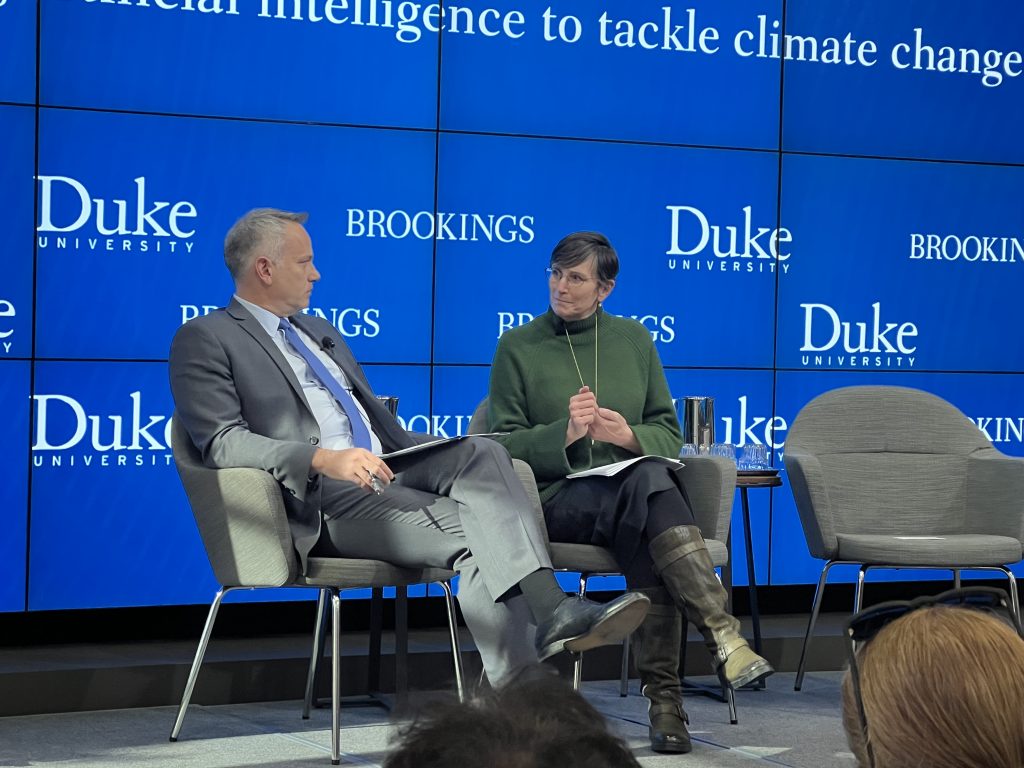
The opening keynote, delivered by Toddi Steelman, vice president and vice provost for climate and sustainability at Duke University, in conversation with Ben Harris, vice president and director of economics studies at Brookings, highlighted the dual nature of AI in the context of climate change. Steelman emphasized that AI holds immense promise in accelerating efforts to decarbonize the economy, reduce greenhouse gas emissions and enhance climate resilience. At the same time, the rapid expansion of AI technologies and data centers has increased global energy consumption, raising concerns about how the growth of these technologies could undermine decarbonization goals.

“Even though AI can help handle large amounts of data that can contribute to climate change research, each AI-enabled query takes 10 times as much electricity as a traditional Google search query,” Steelman said. “This is an important issue.”

Brian Murray, director of the Nicholas Institute for Energy, Environment and Sustainability, added, “AI and data centers have pushed us from a world of flat-load growth in electricity to one of rising demand. Data center power demands are expected to rise about 160% in this decade, and about a quarter to one-third of the load growth is due to AI,” said Murray, who moderated a panel on managing the energy demands of AI during the event. He also referenced a recent report by the Nicholas Institute for Energy, Environment & Sustainability at Duke that explored how the load growth driven in part by AI will likely cause emissions to be higher in 2035 than they otherwise would be.

Bridging the Gap: AI’s Role in Tackling Climate Change Risks

One of the most pressing issues addressed at the event was the role AI can play in mitigating and adapting to the effects of climate change.  AI is already making significant strides in areas such as climate science, weather prediction, energy management and resource optimization, Steelman said.

“When we think about climate research at large, the power comes from the enormous data sets, what we can learn from them and what they potentially tell us about the future. Paleoclimatology looks at what happened in deep time—hundreds of millions of years ago. If we can understand the past better, we can understand the future,” Steelman said.

This data-driven approach enables more accurate predictions of global temperatures, ocean conditions and extreme weather events. Such insights are critical for planning future climate actions and preparing for the impacts of rising global temperatures, Steelman said.

In terms of mitigation, AI is already making a difference by optimizing energy systems and reducing emissions to balance energy loads between renewable and non-renewable sources.

Adaptation efforts are also being enhanced through AI through simulations that look at policies, Steelman said. By understanding how communities respond to climate risks and carbon pricing, AI can help policymakers craft more effective climate adaptation strategies for all people.

David Brown, Snow Family Business Professor of the Fuqua School of Business and faculty director of Fuqua’s Center for Energy, Development, and the Global Environment (EDGE), was on a panel at the event looking at how AI can be used to solve climate change. He pointed to climate modeling as an advantage of AI. “With AI-based models, you can think about local planning at the municipality level, neighborhood level and maybe even the household level to plan for adaptation and resilience,” he said.

The Energy Challenge: AI’s Growing Footprint

The hyperscalers — companies like Google, Amazon and Microsoft — are already investing heavily in zero carbon energy such as renewables and nuclear power to mitigate the emissions impact of their data centers. However, some of these solutions, such as small modular nuclear reactors, are still years away from being deployed, and the challenge remains how to expand AI infrastructure without exacerbating climate risks.

Steelman noted that while AI’s role in climate science and sustainability is crucial, the energy consumption associated with AI cannot be ignored. As AI systems evolve, more efficient hardware, improved cooling systems and innovative energy solutions will be necessary to ensure that the benefits of AI do not come at the expense of the planet.

Looking Ahead: Universities as Catalysts for Change

Steelman highlighted the crucial role universities will play in shaping AI’s impact on climate change. This includes conducting research on the ethical implications of AI, improving the energy efficiency of data centers and developing AI-driven solutions that prioritize equity and accessibility.

“AI is a both a blessing and a curse. It can help us find solutions. There is a lot we can do with AI to increase our knowledge, insight and wisdom. We can amass and explore large data sets to help with prediction and patterns through AI. But we can’t ignore the issues around AI, including ensuring equitable access to these tools,” Steelman said.

Steelman emphasized that universities can use their convening power to facilitate collaboration across sectors, bringing together policymakers, researchers and industry leaders to find innovative solutions to the energy challenges posed by AI.

“Universities can lean into convening to bring together stakeholders for conversations, while doing cutting-edge research and providing education,” she said.

Ronnie Chatterji, Mark Burgess & Lisa Benson-Burgess Distinguished Professor at the Fuqua School of Business, delivered closing remarks, adding that this topic will require collaboration and multiple innovations, including changes to hardware, software, data centers, sources of energy, finance, and policy. Chatterji mentioned the power of university convening, such as the recent Billions to Trillions conference at Duke. “Flexibility will be key as we learn more each day about the challenges and opportunities ahead with AI.”

Watch the event recording: https://www.brookings.edu/events/leveraging-artificial-intelligence-to-tackle-climate-change/

Photo courtesy of Betsy Scarisbrick

Ben Harris and Toddi Steelman at Brookings event

Looking Ahead to Next Carbon Goals

Growing the Campus While Shrinking Emissions

Decade of Offsets Yields High Quality Outcomes

Oct. 10 Forum to Connect Faculty with Climate, Each Other

Can Debt-for-Nature Swaps Help Achieve Climate Goals?

Tackling Barriers to Climate Change Goals

Page 2 of 12

Powered by WordPress & Theme by Anders Norén