
“Jacques Cousteau is known for saying that the ocean is a ‘silent world’ but the ocean is actually an acoustically lively place, including with increasing anthropogenic noise,” remarks Doug Nowacek, who has spent his career studying noise in the ocean, specifically how noise affects marine mammals like whales and dolphins. “All these things humans do in the ocean are noisy, all these interventions – industrial development, shipping, military activity – can have an impact on marine life. Unfortunately, this ocean noise poses three major threats to marine mammals – masking natural sounds, causing hearing damage, and inducing stress, actual stress. Just like noise affects us.”
We come from a collaborative angle and say, how can we work together to ensure construction doesn’t impact these animals. It’s amazing how responsive they are when you take that approach.”
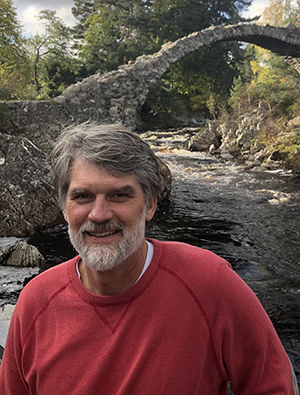
Nowacek is the Randolph K. Repass and Sally-Christine Rodgers University Distinguished Professor of Conservation Technology in Environment and Engineering. His is the first position jointly held between the Nicholas School of the Environment and the Pratt School of Engineering. “I actually started my work at Duke when I was an undergrad,” says Nowacek. “I came to the Marine Lab for a summer and learned about the ‘work hard play hard’ ethos of the place. I loved it. You bust it in the lab all day and then hop in a kayak at the end of it. How could I not want to have a job here?”
Before he arrived at Duke and throughout his career here at the Marine Lab, Nowacek has strived to approach research through the experience of the animals he studies. “Ocean mammals live an acoustic life,” he says. “They have vision, smell, touch, but their acoustic acumen is akin to a dog’s sense of smell. Whale songs, dolphin whistles. They can find and discriminate prey while 2,000 meters under water.”
Nowacek and his team excel at tagging and tracking whales to understand their behaviors in relation to “anthropogenic” or human-engineered sound. Previously, harpoons were used by scientists to affix monitors to the mammals (something Nowacek never did, to be clear). Now they use drones to hover over the whales and tag them. “I was doing drones before drones were cool,” says Nowacek.
The drones carry a suction cup tag that measures a suite of variables. “We are basically putting an iPhone on the whales, which tracks their path and depth, records their sounds, all data used to assess the impact of human noise on their actions – how they hunt, migrate, and even demonstrate stress.”
Nowacek had an instructive research project when he was a postdoctoral fellow at the Wood Hole Oceanographic Institute years ago. “We were trying to understand how whales – right whales, called that because ‘they are the right whales to kill’ – might respond to alarm signals from a boat. Could we somehow tell the whales that they might be in danger as a vessel approached?”
“But imagine if you were raised in the woods,” Nowacek continues, “and you were put in the middle of a busy intersection and then a siren blared at you. You wouldn’t know what to do. That’s what was happening to the whales, even as we were trying to help them.” That research project was ultimately a success in that it informed more successful interventions later on.
In the last 25 years, sadly, there’s no record of right whales dying of old age. There’s fewer than 400 of them left in the world. Every dead whale that is found has died as a result of being caught in fishing gear or being hit by a boat. Fortunately, Nowacek and his team have developed strong relationships with government agencies, NGOs, the Navy, and shipping and industry leaders to mitigate further loss to this animal and the greater marine animal community. He is also engaged internationally and notes that ocean noise was a significant topic at the UN Oceans Conference in Nice, where a resolution was passed, with almost 40 countries signing on, indicating growing recognition of the issue.
Nowacek and his team are currently working on a project that seeks to understand how the development of ocean-based wind farms may affect marine mammal, bird, and bat communities. Both how their life-cycle patterns are affected not only by the noisy construction efforts, but also the ongoing management of these massive but critically important structures for renewable energy.
“We don’t approach industry from a regulatory perspective. When we started talking to them, they were concerned that we were the police, like we were there to catch them on bad behavior, but it’s not the case. We come from a collaborative angle and say, how can we work together to ensure construction doesn’t impact these animals. It’s amazing how responsive they are when you take that approach.”
Top photo courtesy of NY Climate Exchange.