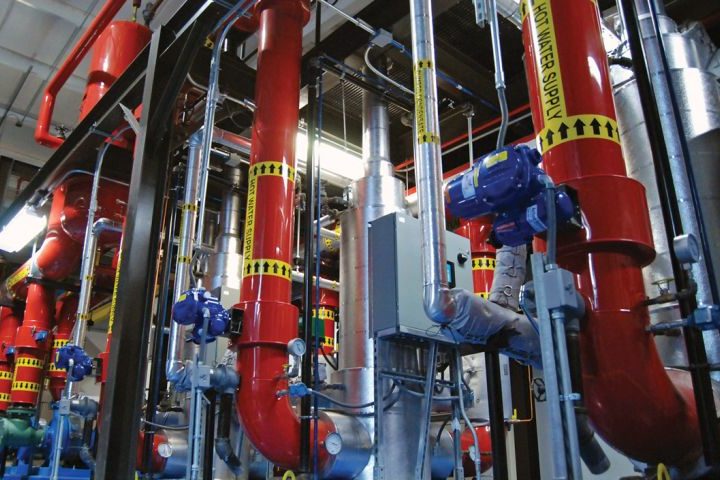
Duke’s steam system has heated campus buildings for nearly a century, by first using steam, then adding natural gas boilers, across 19 miles of piping. While still crucial for medical and research facilities, steam is being phased out for other buildings. Since 2014, Duke has been expanding a hot water system that now serves 33 buildings on West Campus and six on East Campus, replacing steam as part of the university’s commitment to reducing carbon impact through more efficient systems.
In fall 2024, Duke Facilities Management converted the Fuqua School of Business and Duke Law buildings to hot water, eliminating five underground utility vaults (aka “manholes”) and 2,000 feet of steam and condensate pipe with the net result of 15% less heating energy required to serve the two buildings. This conversion allowed for annual savings of 620 tons of CO2e and approximately $197,000 in heating costs each year.
Additional efforts to convert steam to hot water in alignment with The Garden Gateway project at the Sarah P. Duke Gardens included the disconnection of the last segment of the East-West Steam Connector. This crucial action enabled the decommissioning of eight steam vaults and the removal of 3,300 feet of steam and condensate piping. As a result, energy consumption was significantly decreased, and CO2e emissions were reduced by another 980 tons, which is expected to save approximately $312,000 in heating costs annually. READ MORE.
Powered by two plants on West Campus, Duke’s hot water system offers a more efficient alternative to the steam system that has heated campus for nearly a century. Photo by Stephen Schramm.