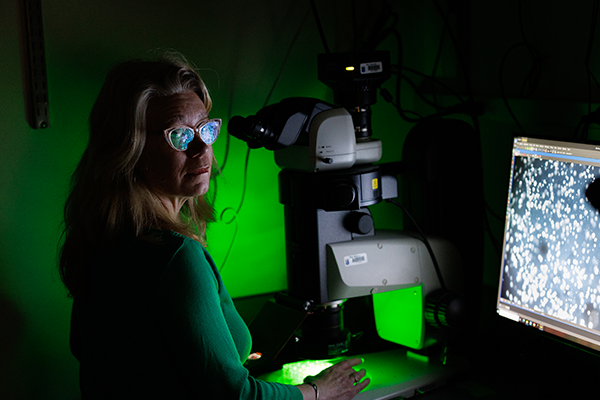
Amy Gladfelter, a cell biologist at Duke University School of Medicine, published research last summer that identifies a shape-shifting protein that can tolerate changes and function, possibly even better under new conditions. This adaptability might help some organisms, like fungi and plants, cope with climate change. It could also mean fungi will adapt to survive in warmer temperatures, potentially evolving into dangerous pathogens. The insights from this research could be used to enhance crop resilience, potentially helping agriculture withstand extreme weather conditions, or to understand how to treat fungal pathogens. READ MORE.
Amy Gladfelter at Duke University School of Medicine unlocks the potential of shape-shifting proteins to drive climate adaptation. Photo by Eamon Queeney, Duke School of Medicine.