
After graduating from Yale in political science, Tim Profeta volunteered at the National Resource Defense Council (NRDC).
“Environmental issues are this multidimensional multidisciplinary monster and I didn’t know exactly where my passion was. I got exposed to all these people – economists, chemists, biologists, lawyers. I realized I liked the role of the lawyer. I wanted to be the one who put the suit on and executed on all this acquired knowledge.”
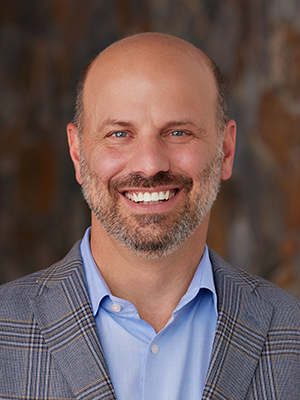
Former Duke President Dick Brodhead liked to say our university responsibility is to ‘create knowledge in the service of society.’ I love that that’s what the Nicholas Institute does every day.
Profeta ended up applying to Duke Law School, where the Dean of Admissions, after hearing about his passion for the environment, asked whether he’d be interested in pursuing a joint master’s degree in environmental management to go with his Law degree.
“Here was Duke personalizing my educational path for me,” he recalled. “That’s when I knew I belonged here.”
While in school at Duke, Profeta was able to start executing on the acquired knowledge he’d imagined when volunteering at the NRDC.
“Friends of mine in law school would be just in this soup of acronyms when learning environmental law and wouldn’t really understand what they were learning or why. I would be there taking biology class or the economics class at the same time that contextualized what the statute was trying to do and gave me a much better affinity to understand what the intended policy outcomes of the environmental statutes were.”
From there, Profeta went to Washington, where he became Senator Joe Lieberman’s point person on climate change. That experience of negotiating, drafting legislation, and managing the complexities of the DC climate bureaucracy shaped the instincts he would bring back to Duke. In 2005, he became the founding director of the Nicholas Institute for Environmental Policy Solutions—known today as the Nicholas Institute for Energy, Environment & Sustainability.
The institute was something of a “unicorn,” Profeta explains, because it was designed from the start to operate differently than traditional academic units. Profeta credits the late Peter Nicholas, whom Profeta calls “a force of nature,” with this unique orientation. “Pete had named the Nicholas School, which was doing all the amazing things schools do – faculty research, teaching students, disseminating knowledge through society – and he said, ‘Okay, but who’s talking to the White House? Who’s talking to Congress? Who’s talking to corporate CEOs? Let’s build that.’ So they gave this gift to create an institute and fortuitously,” Profeta laughs, “I was the second but eventual top choice of the committee.”
From the outset, the Institute hired professionals who could translate research into action.
“There is a chasm between academia and applied audiences,” Profeta said. “You need special people who can bridge that gap.”
As the institute’s director until 2021, Profeta built a team of nearly 50 professionals who do just that. The Institute’s team draws on Duke’s interdisciplinary culture to convene leaders from inside and outside academe, in industry and government to drive environmental policy and impact. Sometimes Nicholas Institute experts even take on temporary assignments within government agencies, as Profeta did during a sabbatical in 2022-2024, when he worked at the U.S. Environmental Protection Agency.
Now back at Duke as an Executive in Residence at the Institute, Profeta shared a recent example of the Institute’s work. “We’ve convened southeastern energy regulators for the last dozen years. In one of our last meetings, these guys are talking about how to deal with the fact we have this ravenous demand for energy coming out of data centers. I brought this superstar PhD student Tyler Norris to the meeting.” Norris had been the head of policy for a major renewable company before he enrolled to get his doctorate at Duke.
“So a Georgia commissioner asks whether there’s any flexibility in energy demand; he thought you had to keep your data center on 24/7,” Profeta recalls. “That was on a Friday. I wake up on Monday morning and Tyler’s already run the numbers. He figured out that across 15 regions we don’t use 47% of our electric grid on average. It sits there unused. And he showed how tiny shifts in demand and behavior could free up the equivalent of 35 nuclear power plants worth of capacity.”
That research this year became the most downloaded report the Nicholas Institute’s ever had. “I’ve got CEOs of companies writing about it. I’ve got energy regulators now creating policy around it. Dick Brodhead (former Duke President) liked to say our university responsibility is to ‘create knowledge in the service of society.’ I love that that’s what the Nicholas Institute does every day.”
Photos courtesy of the Nicholas Institute for Energy, Environment & Sustainability